

Catechism
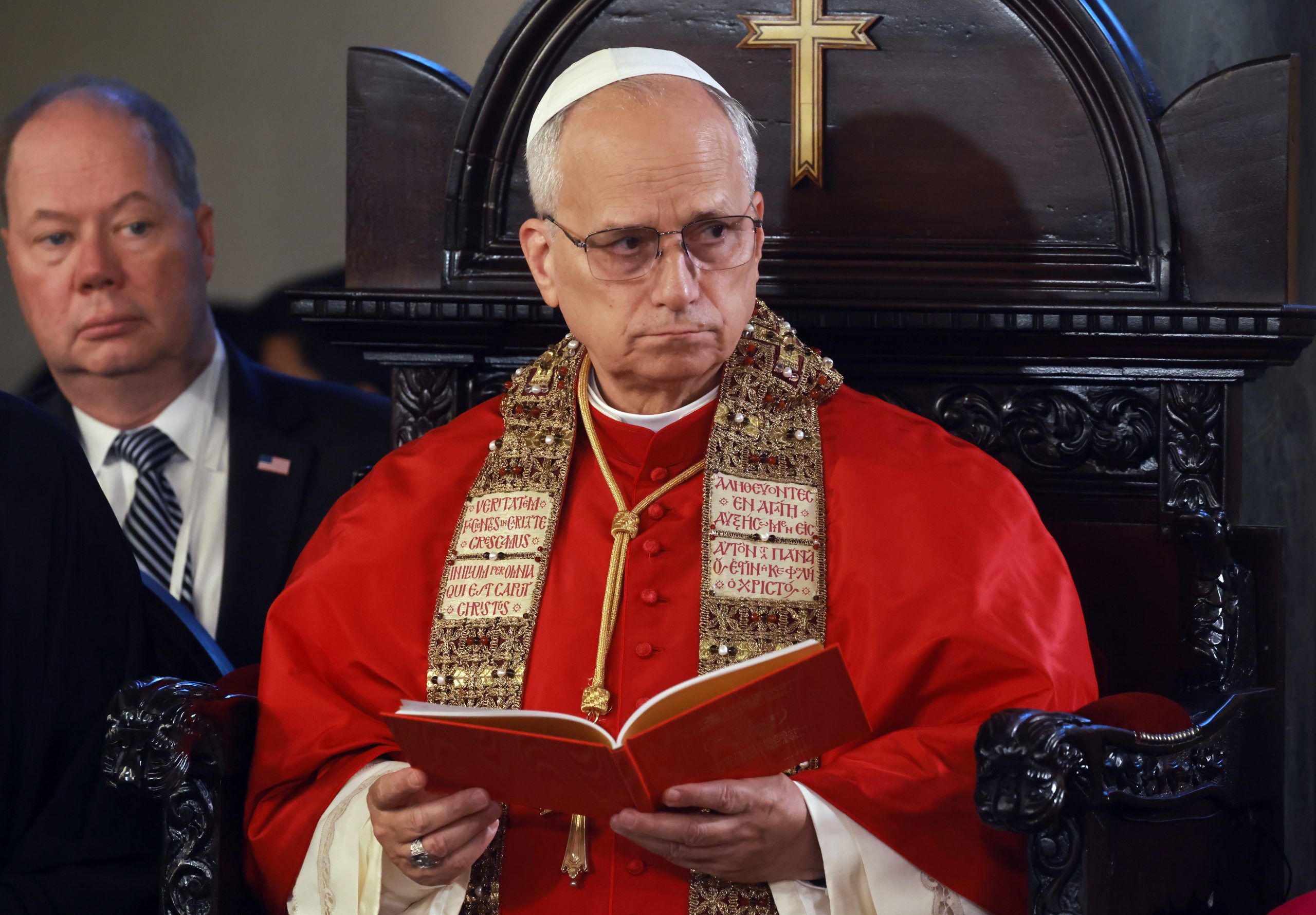
Pope Leo XIV’s first encyclical now expected later this month
Pope Leo XIV’s first encyclical, expected to address artificial intelligence, international peace and the crisis in international law, is now expected later this month after the Holy See Press Office indicated an announcement regarding the document will be made on May 22 Pope Leo XIV’s first encyclical, which was widely reported as being due to be signed today, is now not expected to be signed and published until later this month. According to reports from the German Catholic news agency KNA, it had been due to be signed on May 15. However, Matteo Bruni, director of the Holy See Press Office, told journalists that an announcement regarding the document will be made on May 22. Circulating under the provisional title Magnifica Humanitas , it is expected to address a range of issues including artificial intelligence, international peace and what sources describe as a crisis in international law. The encyclical follows earlier indications that the Holy See had been preparing a document focused specifically on artificial intelligence. At the beginning of February, reports pointed to work under way on a text examining the ethical and anthropological implications of emerging technologies. Pope Leo XIV has already spoken about the risks associated with technological development, warning of the dangers posed by “uncontrolled technology” and stressing the importance of safeguarding human dignity. According to reports, the encyclical will also address geopolitical instability and the perceived weakening of international legal structures. The document is expected to set out the Church’s response to some of the principal challenges facing humanity in the 21st century. The anticipated date of May 15 would have matched the signing and publication of Rerum Novarum , Pope Leo XIII’s best-known encyclical, which was issued on May 15, 1891. The document is regarded as the foundational text of modern Catholic social teaching and addressed the condition of workers during the industrial age. The same date was chosen in 1931 by Pope Pius XI for Quadragesimo Anno , which developed the Church’s teaching on social order and introduced the principle of subsidiarity. Thirty years later, on May 15, 1961, Pope John XXIII promulgated Mater et Magistra , which focused on economic justice and social development. However, with an announcement now expected on May 22, it is possible that the release date may instead coincide with John Paul II’s Ut Unum Sint , on ecumenism, which was issued on May 25, 1995, or Pope Leo XIII’s Annum Sacrum , which was issued on May 25, 1899 and consecrated the entire human race to the Sacred Heart of Jesus. The expected treatment of artificial intelligence would build on recent Vatican teaching. In January 2025, the Dicastery for the Doctrine of the Faith and the Dicastery for Culture and Education issued Antiqua et Nova , a joint note on “the relationship between artificial intelligence and human intelligence”. The document said AI could bring “important innovations” but warned that it also carried the danger of deepening inequality, manipulating public opinion and expanding “the instruments of war well beyond the scope of human oversight”. It added that artificial intelligence “should not be seen as an artificial form of human intelligence, but as a product of it”, and insisted that it “should be used only as a tool to complement human intelligence rather than replace its richness”. As yet, no date has been confirmed and the title Magnifica Humanitas remains provisional.
May. 15, 2026
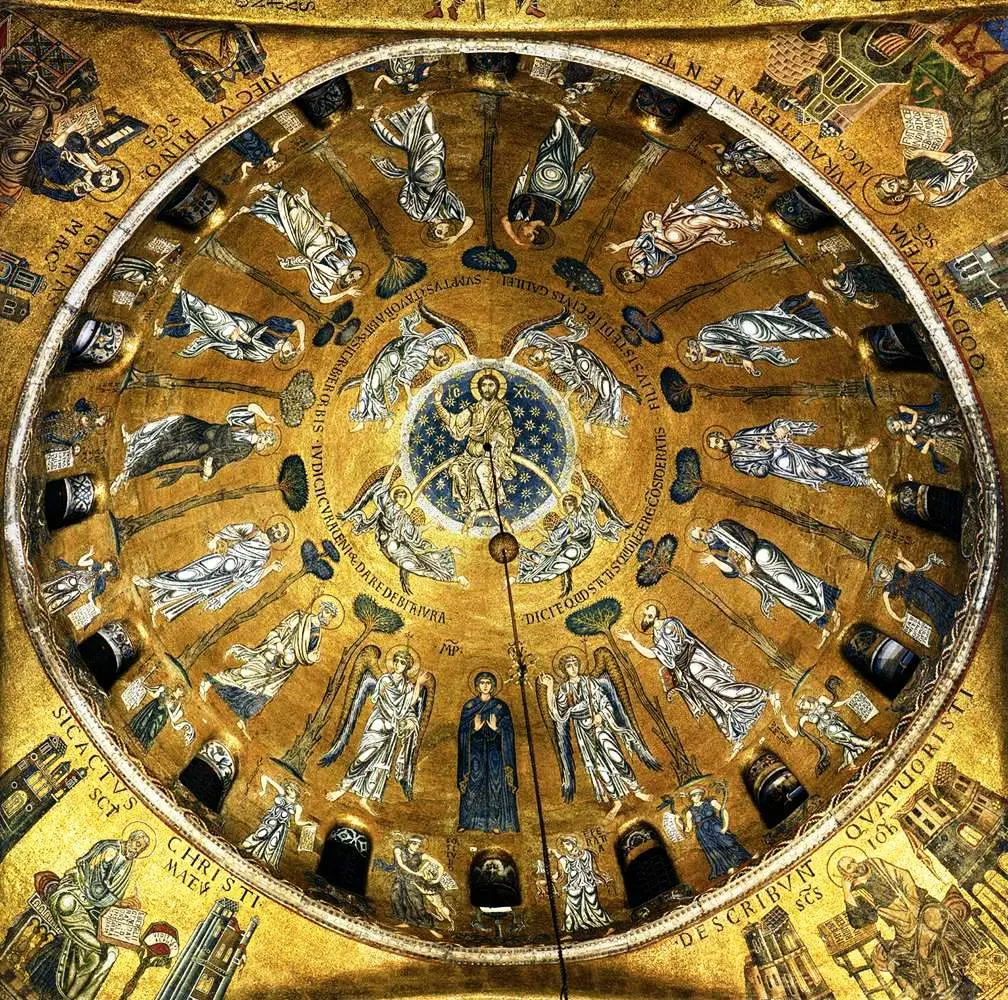
St Leo the Great on the Ascension and the triumph of faith
In this sermon for the Feast of the Ascension, St Leo the Great reflects on Christ’s triumph over death, the transformation of the Apostles after the Ascension, and the call for Christians to lift their hearts above earthly things and towards eternity The mystery of our salvation, dearly beloved, which the Creator of the universe valued at the price of His blood, has now been carried out under conditions of humiliation from the day of His bodily birth to the end of His Passion. And although even in the form of a slave many signs of Divinity have beamed out, yet the events of all that period served particularly to show the reality of His assumed Manhood. But after the Passion, when the chains of death were broken, which had exposed its own strength by attacking Him, Who was ignorant of sin, weakness was turned into power, mortality into eternity, contumely into glory, which the Lord Jesus Christ showed by many clear proofs in the sight of many, until He carried even into heaven the triumphant victory which He had won over the dead. As therefore at the Easter commemoration, the Lord’s Resurrection was the cause of our rejoicing, so the subject of our present gladness is His Ascension, as we commemorate and duly venerate that day on which the Nature of our humility in Christ was raised above all the host of heaven, over all the ranks of angels, beyond the height of all powers, to sit with God the Father. On which Providential order of events we are founded and built up, that God’s Grace might become more wondrous, when, notwithstanding the removal from men’s sight of what was rightly felt to command their awe, faith did not fail, hope did not waver, love did not grow cold. For it is the strength of great minds and the light of firmly faithful souls unhesitatingly to believe what is not seen with the bodily sight, and there to fix one’s affections whither you cannot direct your gaze. And whence should this Godliness spring up in our hearts, or how should a man be justified by faith, if our salvation rested on those things only which lie beneath our eyes? Hence our Lord said to him who seemed to doubt Christ’s Resurrection until he had tested by sight and touch the traces of His Passion in His very Flesh: “Because you have seen Me, you have believed: blessed are they who have not seen and yet have believed” (John 20:29). In order, therefore, dearly beloved, that we may be capable of this blessedness, when all things were fulfilled which concerned the Gospel preaching and the mysteries of the New Testament, our Lord Jesus Christ, on the fortieth day after the Resurrection in the presence of the disciples, was raised into heaven, and terminated His presence with us in the body, to abide on the Father’s right hand until the times Divinely foreordained for multiplying the sons of the Church are accomplished, and He comes to judge the living and the dead in the same flesh in which He ascended. And so that which till then was visible of our Redeemer was changed into a sacramental presence, and that faith might be more excellent and stronger, sight gave way to doctrine, the authority of which was to be accepted by believing hearts enlightened with rays from above. This Faith, increased by the Lord’s Ascension and established by the gift of the Holy Ghost, was not terrified by bonds, imprisonments, banishments, hunger, fire, attacks by wild beasts, or refined torments of cruel persecutors. For this Faith throughout the world not only men, but even women, not only beardless boys, but even tender maids, fought to the shedding of their blood. This Faith cast out spirits, drove off sicknesses, and raised the dead; and through it the blessed Apostles themselves also, who after being confirmed by so many miracles and instructed by so many discourses, had yet been panic-stricken by the horrors of the Lord’s Passion and had not accepted the truth of His Resurrection without hesitation, made such progress after the Lord’s Ascension that everything which had previously filled them with fear was turned into joy. For they had lifted the whole contemplation of their mind to the Godhead of Him that sat at the Father’s right hand, and were no longer hindered by the barrier of corporeal sight from directing their mind’s gaze to That Which had never quitted the Father’s side in descending to earth, and had not forsaken the disciples in ascending to heaven. The Son of Man and Son of God, therefore, dearly beloved, then attained a more excellent and holier fame, when He betook Himself back to the glory of the Father’s Majesty, and in an ineffable manner began to be nearer to the Father in respect of His Godhead, after having become farther away in respect of His manhood. A better instructed faith then began to draw closer to a conception of the Son’s equality with the Father without the necessity of handling the corporeal substance in Christ, whereby He is less than the Father, since, while the Nature of the glorified Body still remained, the faith of believers was called upon to touch not with the hand of flesh, but with the spiritual understanding the Only-begotten, Who was equal with the Father. Hence comes that which the Lord said after His Resurrection, when Mary Magdalene, representing the Church, hastened to approach and touch Him: “Touch Me not, for I have not yet ascended to My Father” (John 20:17): that is, I would not have you come to Me as to a human body, nor yet recognise Me by fleshly perceptions: I put you off for higher things, I prepare greater things for you. When I have ascended to My Father, then you shall handle Me more perfectly and truly, for you shall grasp what you cannot touch and believe what you cannot see. But when the disciples’ eyes followed the ascending Lord to heaven with upward gaze of earnest wonder, two angels stood by them in raiment shining with wondrous brightness, who also said: “You men of Galilee, why do you stand gazing into heaven? This Jesus Who was taken up from you into heaven shall so come as you saw Him going into heaven” (Acts 1:11). By which words all the sons of the Church were taught to believe that Jesus Christ will come visibly in the same Flesh wherewith He ascended, and not to doubt that all things are subjected to Him on Whom the ministry of angels had waited from the first beginning of His Birth. For, as an angel announced to the blessed Virgin that Christ should be conceived by the Holy Ghost, so the voice of heavenly beings sang of His being born of the Virgin also to the shepherds. As messengers from above were the first to attest His having risen from the dead, so the service of angels was employed to foretell His coming in very Flesh to judge the world, that we might understand what great powers will come with Him as Judge, when such great ones ministered to Him even in being judged. And so, dearly beloved, let us rejoice with spiritual joy, and let us with gladness pay God worthy thanks and raise our hearts’ eyes unimpeded to those heights where Christ is. Minds that have heard the call to be uplifted must not be pressed down by earthly affections; they that are foreordained to things eternal must not be taken up with the things that perish; they that have entered on the way of Truth must not be entangled in treacherous snares, and the faithful must so take their course through these temporal things as to remember that they are sojourning in the vale of this world, in which, even though they meet with some attractions, they must not sinfully embrace them, but bravely pass through them. For to this devotion the blessed Apostle Peter arouses us, and entreating us with that loving eagerness which he conceived for feeding Christ’s sheep by the threefold profession of love for the Lord, says: “Dearly beloved, I beseech you, as strangers and pilgrims, abstain from fleshly lusts which war against the soul” (1 Peter 2:11). But for whom do fleshly pleasures wage war, if not for the devil, whose delight it is to fetter souls that strive after things above with the enticements of corruptible good things, and to draw them away from those abodes from which he himself has been banished? Against his plots every believer must keep careful watch that he may crush his foe on the side whence the attack is made. And there is no more powerful weapon, dearly beloved, against the devil’s wiles than kindly mercy and bounteous charity, by which every sin is either escaped or vanquished. But this lofty power is not attained until that which is opposed to it be overthrown. And what so hostile to mercy and works of charity as avarice, from the root of which spring all evils? And unless it be destroyed by lack of nourishment, there must needs grow in the ground of that heart in which this evil weed has taken root the thorns and briars of vices rather than any seed of true goodness. Let us then, dearly beloved, resist this pestilential evil and follow after charity, without which no virtue can flourish, that by this path of love whereby Christ came down to us, we too may mount up to Him, to Whom with God the Father and the Holy Spirit is honour and glory for ever and ever. Amen.
May. 14, 2026
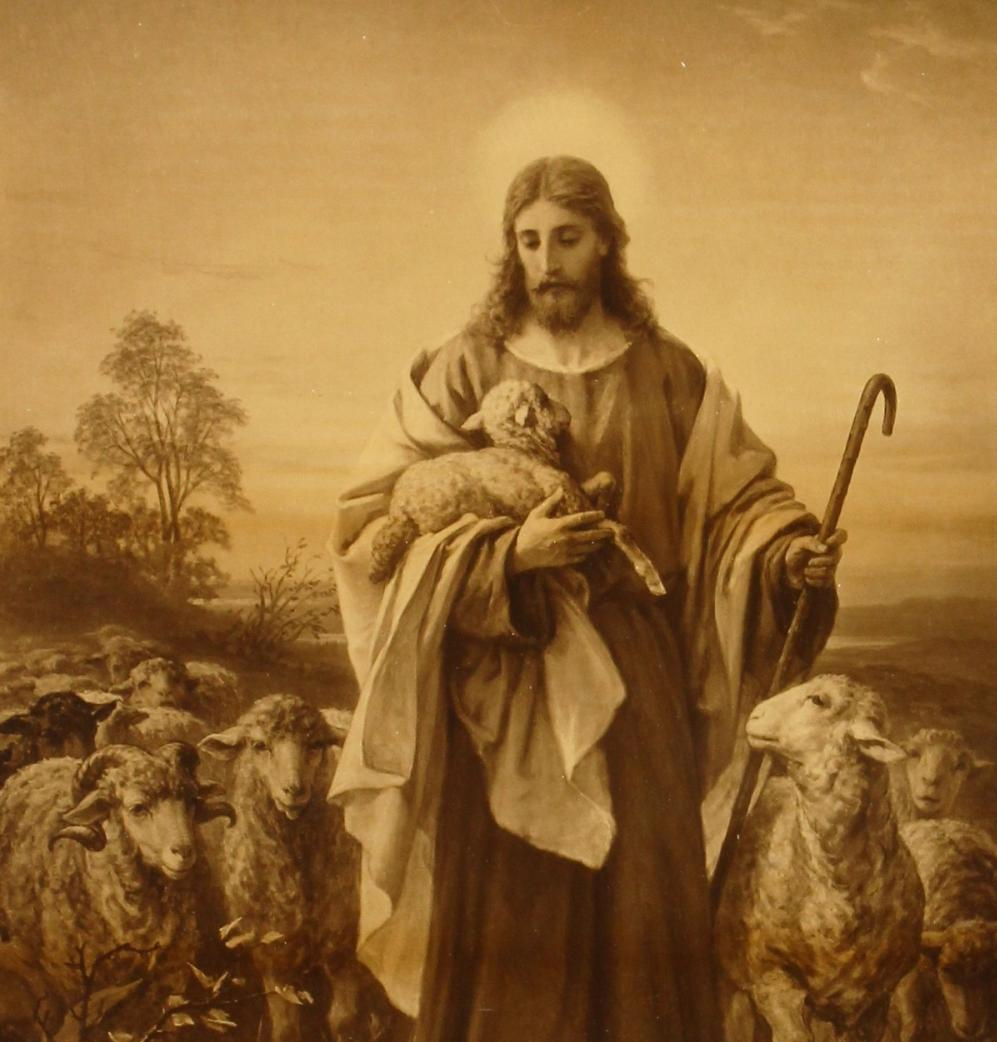
Sheep among wolves: strength and gentleness in the Christian life
To follow Christ is to hold together strength and gentleness in a world that resists both. Br René Stockman, former Superior General of the Congregation of the Brothers of Charity, reflects on how in the face of conflict and confusion, the Gospel calls for courage shaped by grace, not force Those who try to follow Jesus Christ radically and put His message into practice have never had it easy in this world. His person and His message met with resistance in His time and led Him to the Cross. It would therefore be surprising if this resistance were to disappear today, for that would mean we had watered down the Gospel message into a pleasant story for our times. Christ brought us the Good News, a message that leads to true life, but that is not always the life the world holds up as an ideal. On the contrary. If we take the Sermon on the Mount, the heart of the message Christ wanted to impart to us, it would take a great deal of manipulation to reconcile it with what the world prioritises. We therefore often hear that, in the business world, one would not get very far with a message like the Sermon on the Mount. But even in our own lives, it is very difficult to remain consistently faithful to the radical message of the Gospel. Are we willing, like Christ, to take up our cross and follow Him all the way to Calvary, or do we give in to the temptation to fabricate our own interpretation of the Gospel, one that offends no one and grants us an easy life? The Gospel message, brought to us by Christ, calls on us, on the one hand, to be forceful in fulfilling it, yet at the same time not to lose our gentleness. These are two seemingly contradictory qualities that we must strive to hold together. If we act only forcefully, we run the risk of turning the Good News into something harsh, a spirituality that amounts to us being strict with ourselves and equally strict with others. It is a spirituality that actually takes us back to the mindset of the Pharisees, who were Our Lord’s chief opponents. But do we not then miss the joy that a life centred on God can bring us? Do we not run the risk of narrowing the message of the Gospel down to a strict rulebook? And do we not place burdens on our own shoulders and those of others that are difficult to bear, burdens that are often regarded as the exclusive result of our own efforts? It then seems as though we want to live for God, but at the same time without God. It is a spirituality that can even make us arrogant, self-satisfied in the thought that we are, after all, good Christians and much better than others. With such an attitude, we leave no room for God’s grace and rely exclusively on our own efforts. Our forceful actions then become strained behaviour that will have little positive impact on others. We view the Gospel message as intended for an elite, and we are glad to belong to this elite. Forcefulness alone will not get us there, and then we are very far from the basic attitude that Paul describes when he says: “When we are weak, then we are strong” (2 Cor. 12:10). In the teaching of St Paul a very different tone is struck, and we are called to adopt a meek attitude. But here too we must be careful about what we understand by this meekness and how we interpret the weakness that Paul describes. Paul was not a figure who radiated weakness. Rather, he was forceful and full of courage. Before his conversion, he did not spare the sword in persecuting Christians. And after his conversion, with similar zeal and strength, he travelled with boundless dedication to proclaim the Good News everywhere. He was not a man of compromise. Yet in his letters we also discern a genuine concern for those with whom he lived and worked. We need only read the letter he wrote to Philemon to see the tenderness with which he speaks of his relationship with him. In his Song of Love (1 Cor. 13) he reveals the warmth that was in his heart: “Set your heart on love” (1 Cor. 14:1) is the command he gives to us all. It was love that drove him and channelled his intense character into the almost incomprehensible zeal that marked him. From Paul, we learn that we do not have to set aside our individuality when we want to follow Christ, but that we must entrust ourselves to His grace. We must truly become instruments in His hands and therefore be willing to surrender ourselves to Him, until we can say with that same Paul: “It is no longer I who live, but Christ who lives in me” (Gal. 2:20). It is Christ who must become the reference point in our lives, He alone. Christ did not change the characters and professional skills of His Apostles, but He did give them a new orientation. “From now on I will make you fishers of men” (Mt 4:19). But in this new mission, they will allow themselves to be guided by Christ and will also obey Him when He commands them, against all reason, to cast their nets on the other side (cf. John 21:6). It is Jesus who becomes their shepherd and who carries this out with both strength and gentleness. He sends them out as sheep among wolves, but as the good shepherd, He will never abandon them. That is the heart of the matter: in Jesus Christ we have a good shepherd, to whose guidance we may entrust ourselves. We pray this in the well-known Psalm 23: “The Lord is my shepherd; I shall not want. He makes me lie down in green pastures … Even though I walk through the valley of the shadow of death, I will fear no evil, for You are with me …” Indeed, if we follow Him, we have nothing to fear, even if our path leads through dark valleys and we face situations that seem hopeless from a purely human perspective. To stay with the image of the shepherd and his sheep, we recall the words of St John Chrysostom, in which he urges us to resist the temptation to become wolves ourselves. “As long as we remain sheep, we will prevail, and even if we are surrounded by countless wolves, we will succeed in overcoming them. But if we become wolves, we will be defeated, because we will lack the shepherd’s help. He does not tend wolves, but sheep” (St John Chrysostom, Homily 33 on the Gospel according to Matthew). Here the question arises of how we behave in the face of resistance and persecution. Do we maintain our strength without losing our gentleness, or do we become hard-hearted and use the same weapons with which others try to attack us? In the latter case, we become like wolves and think that only through violence can we wage the battle in the world. There are no moments in history, including our own, when we are not confronted with unjust conditions and situations that are completely at odds with the great principles of the Gospel. We are regularly confronted with direct attacks against the Faith. We live in a time when people are quick, too quick, to reach for weapons in order supposedly to combat injustice. We see this today on the international stage, where so many flashpoints of war are flaring up and where we have fallen into a spiral of violence. All around us, we see wolves devouring the sheep and taking the place of the shepherd. The image of the wolf also brings to mind a story of St Francis of Assisi in the town of Gubbio, where a wolf struck fear into the population but ultimately brought peace. Francis entered into dialogue with the wolf and reached a mutual agreement: he would ensure that the wolf had enough food every day, on condition that the wolf would henceforth leave the people in peace. Is this not a powerful image of how one should try to address injustice and persecution? Instead of immediately resorting to arms, one must give absolute priority to dialogue and strive to reach a feasible compromise, without abandoning moral principles, in the conviction that there is Someone who blesses and guides this dialogue, like a good shepherd. St Francis was able to face that wolf alone because the peace of the Lord was present in his heart. It is this peace that we wish upon one another during the celebration of the Eucharist, and it is with this peace that we must go out into the world. It is therefore regrettable that the wish for peace has often degenerated into an enthusiastic greeting of one another, without a deep realisation that it is the peace of the Lord that we wish upon one another. It is that peace we need in order to stand in the world as sheep and face the confrontation with the wolves we will encounter. “Peace I leave with you; my peace I give to you. Not as the world gives do I give it to you. Let not your hearts be troubled or afraid” (John 14:27). With the peace of the Lord in our hearts, we will not be troubled or lose heart, but will receive the inner strength to face the wolves, like Francis, in a forceful yet gentle manner. Pope Leo XIV has often repeated lately that peace cannot be achieved through weapons. How relevant here are the words of Chrysostom urging us to resist the temptation to act and behave like wolves. This naturally requires humility and the trust that there is still a shepherd who leads us along the right paths and makes us lie down in green pastures (Psalm 23). What we are witnessing today worldwide should prompt us to look into our own hearts, remove all traces that lead to violence and plant there the seeds of God’s peace. In this way, we can truly remain as sheep among wolves, keeping in mind the words of the Lord Jesus: that He will never forsake us (cf. Mt 10:19).
May. 2, 2026

England forgot how to celebrate St. George
From medieval processions, feasts and liturgical splendour to a single tweet from Downing Street, St George’s Day has been reduced to a shadow of its former self. England once honoured its patron with seriousness and scale On April 23, at 7:29am, Keir Starmer, Prime Minister of the United Kingdom, told his 2.2 million followers on X that “today, we fly our flag proudly and we’re reminded of the values it represents – service, generosity and respect.” Lest there be any doubt as to which flag he was paying homage, the comment was followed with “Happy St George’s Day!” As endearing as Keir Starmer’s public flirtation with nationalism may be, St George’s Day is a shadow of its former self. In comparison with the national celebrations and general merriment of earlier centuries, a tweet is underwhelming. The official @10DowningStreet account did go as far as posting a short, uninformative video in commemoration of the Saint; however, a similar video had been posted the week before wishing “everyone celebrating a happy Nepali New Year”. While Keir Starmer can be blamed for some of the social ills of England, the demise of St George’s Day does not fall on only his shoulders. The rise and fall of England’s saintly culture predates his premiership and finds its origins in more ecclesiastical affairs. St George, a Roman soldier of good Christian stock, was born in Cappadocia, in modern-day Turkey in 275 AD. He spent much of his life under the Emperor Diocletian, who retired shortly after his death, reportedly preferring to garden rather than rule. The Diocletianic persecution, the last and most severe persecution of Christians in the Roman Empire, attempted to force the empire’s Christian population to renounce their faith and offer sacrifice to the Roman gods or face execution. Preferring death to apostasy, St George died a martyr’s death. It was not until the 12th century that devotion to St George took hold in England. Returning from the Third Crusade, stories circulated about his power, and he was adopted as a military patron. In 1222, the Synod of Oxford declared St George’s Day a feast day in England, and in 1348, under Edward III, the newly founded Order of the Garter was placed under his patronage, effectively securing his status as patron of England. In 1415, at the Battle of Agincourt, soldiers fought under the red cross of St George, invoking his name as they entered battle, or, as Shakespeare later put it: “God for Harry, England and Saint George!” (Henry V, Act III, Scene I). Henry V’s army was weary and outnumbered, and England’s eventual triumph was widely accredited to the intercession of St George. The Sarum Missal, England’s medieval variant of the Roman Rite, places St George’s Day within the liturgical calendar as a recognised celebration, sometimes treated as a major feast, with proper prayers and chants assigned to the saint. The Order of the Garter marked the feast with particular solemnity, at times extending its observance to an octave. These liturgical celebrations were accompanied by towns and villages organising processions, plays, pageants and feasts. In the full life of medieval England, the country’s patron was publicly honoured. The demise of such celebrations has its roots in the Reformation. The Sarum liturgy was replaced by the Book of Common Prayer, and the proper Mass for St George gave way to a simple commemoration in the calendar, with the feast stripped of its former liturgical prominence and public ceremonial life. Over the following centuries, the processions and pageantry ceased, the guilds were dissolved, and St George receded from public life. Today, according to the Prime Minister, a single tweet suffices. Much has been made of the need for a renewed patriotism across the land of Mary’s Dowry, but little has been said about how this might be achieved. For a true rejuvenation of English identity, the best place to start would be to honour its patron. The return of the cult of St George, in full liturgical observance and cultural pomp, would likely give the country a powerful civic booster, as well as a recovery of its spiritual nerve.
Apr. 23, 2026