

Dicastery For The Doctrine Of The Faith
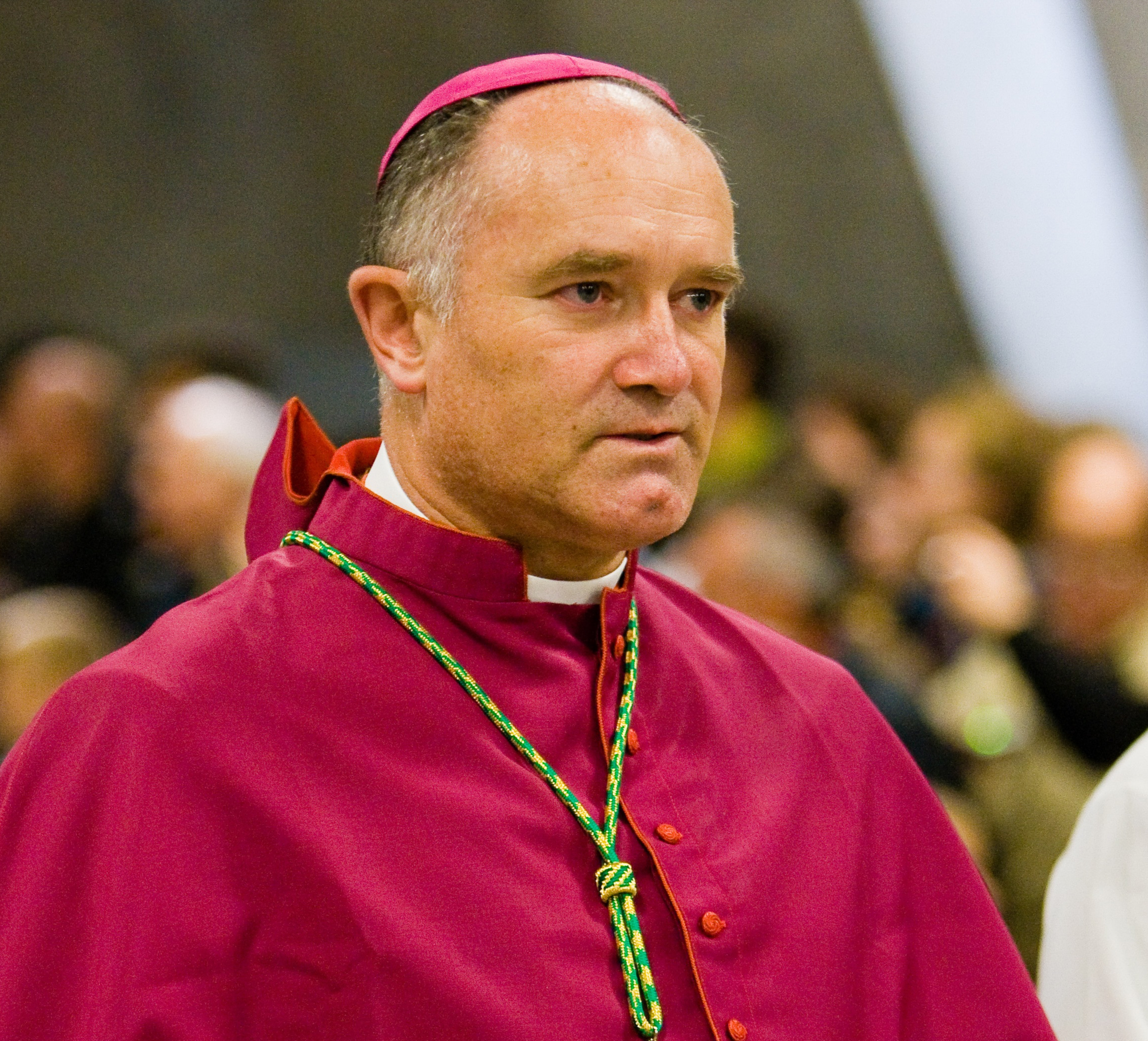
Fellay warns of SSPX faithful excommunication as Rome prepares its response to episcopal consecrations
Bishop Bernard Fellay has warned that the faithful may face excommunication, as indications from Rome suggest a response is being prepared to possible episcopal consecrations without papal mandate In a surprise turn, the former superior general of the Society of Saint Pius X has warned that the faithful may face excommunication, as indications emerge that Rome has prepared a response to possible episcopal consecrations without a papal mandate. In an exclusive sermon transcript obtained by Advaticanum , Bishop Bernard Fellay told those present at confirmations on Good Shepherd Sunday at the Immaculata in St Mary’s, Kansas, that such a development was increasingly likely. “I prefer not to be a prophet here, but I’m pretty sure that there is an enormous probability that all of you, we included, may be excommunicated, declared schismatic, there is a very high probability because they already said it in public. So, they are so to say forcing themselves to do it. But whatever, God can do miracles. It’s not the end.” He continued by framing the homily in spiritual terms, telling the congregation that “our history shows that God wants us to be a sign of contradiction, a sign that reveals hearts. And a sign of contradiction means the Cross. We must be ready to carry it.” Beyond his warning on possible excommunication, Bishop Fellay used the homily to deliver an extended meditation on the nature of the Church, drawing repeatedly on the theme of Good Shepherd Sunday and the Gospel’s declaration that there shall be “one shepherd and one fold”. He began by stressing that the Church, like the human person, possesses both a visible and an invisible dimension, cautioning against what he described as a tendency to remain at the surface. “God has created us with both body and soul,” he said. “There is a visible part and an invisible part, and both are absolutely real. Indeed, the invisible part, the soul, is far more important. Yet we must not set them in opposition. To separate body and soul is to have death, nothing more.” Developing the point, he compared the Faith to a lake whose depths are often ignored. “Many people are content to admire its beautiful surface and believe they know everything about it. But if you truly wish to understand the lake, you must look beneath the surface.” The same, he said, applies to the Church, which cannot be reduced to outward appearances alone. He referred to the longstanding principle Ecclesia de internis non judicat , that the Church does not judge interior dispositions, and linked this to the sacraments, explaining that while matter and form are visible, intention remains hidden and is presumed when the rites are followed. Faith itself, he continued, is likewise interior, but must be outwardly professed. Citing Scripture, he warned: “These people honour me with their lips, but their hearts are far from me.” Turning to the liturgy, Bishop Fellay urged the faithful to deepen their engagement with the prayers of the Holy Mass, recommending that they be read in advance so that participation would not remain merely external. He drew on Archbishop Marcel Lefebvre’s Spiritual Journey, describing the liturgy as “the breathing of the soul” when properly united to interior prayer. He contrasted two approaches to worship, saying that one could remain at “the beautiful surface” or “dive deeper”, and insisted that this distinction applied to all aspects of Christian life. Even ordinary daily actions, he said, could be transformed if consciously offered to God: “If, every morning, we offer our entire day to God, all our actions, joys, and sufferings, then everything becomes an act of charity, praise, and glory to God.” The bishop also employed a more pointed comparison when speaking about the liturgy, likening it to a vessel containing grace. “The surface is important. Consider a glass: the liquid inside is more valuable, but without the glass the liquid is lost,” he said, before adding: “This is precisely what has happened with the new liturgy. They have made holes in the vessel of grace. The Traditional Mass is like a full-flowing river of graces, while the new rite often yields only a few drops.” He went on to describe what he called three pillars of the Church’s visible unity: unity of faith, unity of liturgy and unity of government. Each, he argued, had been “severely struck”. On the unity of faith, he claimed that belief had diminished significantly in various parts of the Church, asserting that outward profession did not always correspond to interior conviction. “They may still recite the Creed outwardly, but interiorly the faith is dead. Whoever denies even one truth of the faith has lost the faith entirely.” The homily was delivered in relation to the question of episcopal consecrations and possible sanctions. According to this publication’s Vatican correspondent, Niwa Limbu, officials within the Dicastery for the Doctrine of the Faith are preparing for the possibility of a formal declaration of excommunication not only of bishops but also of priests belonging to the Society. Vatican correspondent Nico Spuntoni, writing for Il Giornale, relayed that “as far as I know, the Dicastero for the Doctrine of the Faith is already prepared for the possibility of excommunicating the SSPX following the ordinations.” The Holy See has already set out its position in clear terms. In a statement issued following a meeting between the prefect of the Dicastery for the Doctrine of the Faith and the superior general of the Society, it reiterated that episcopal ordinations carried out without pontifical mandate would have grave consequences. The statement said that “the ordination of Bishops without a mandate from the Holy Father, who possesses supreme, full, universal, immediate and direct ordinary power (cf. CIC, can. 331; Dogmatic Constitution Pastor aeternus, chapters I and III), would imply a decisive rupture of ecclesial communion (schism) with grave consequences for the Fraternity as a whole.” Other less official reporting suggests that a similar course may now be under consideration. The blog Rorate Caeli, citing anonymous Roman sources, reported on April 25 that Pope Leo XIV has “decided to follow the ‘1988 jurisprudence’” in relation to any forthcoming consecrations by the Society. According to the report, a decree has already been prepared “similar in tone and content to the one promulgated by Pope John Paul II through Cardinal Bernardin Gantin … on 1 July 1988.” For now, both the warnings from the Holy See and the words of the Society’s leadership indicate that a decisive point may be approaching.
Apr. 26, 2026