

Diocese Of Charlotte
Bishop of the Diocese of Charlotte refuses communion to family at altar rail
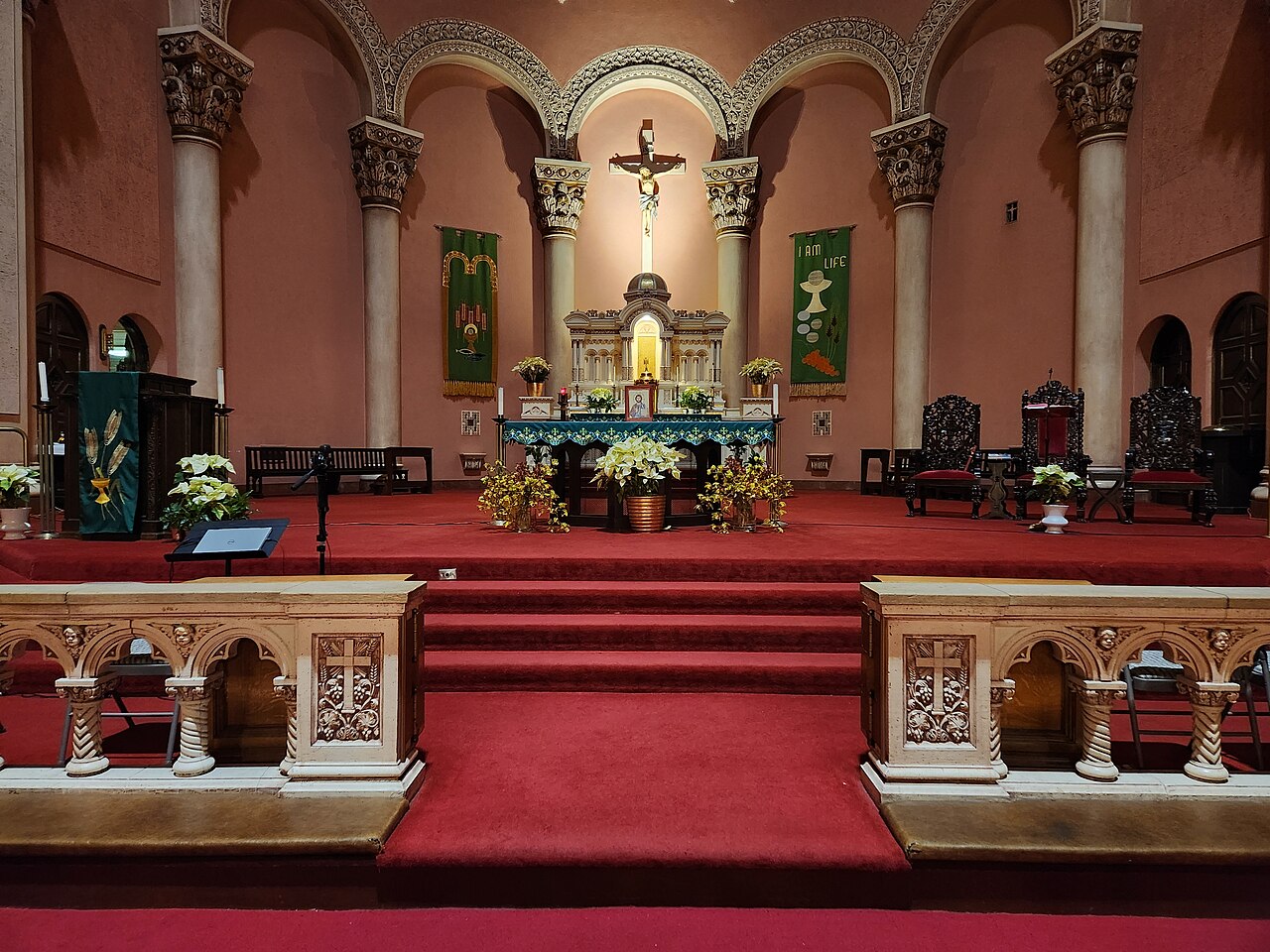
A Catholic family in North Carolina claims they were refused Holy Communion after approaching the altar rail during a Confirmation Mass, according to a report from the Diocese Bishop Michael Martin of Charlotte has refused Holy Communion to a Catholic family who approached the altar rail during a Confirmation Mass, in an AdVaticanum exclusive report. The incident took place on April 29 at Our Lady of Grace parish in Greensboro, North Carolina. While the Confirmation ceremony took place as usual, during Communion only two or three families approached the altar rail to receive the Eucharist. One father who brought his family said to AdVaticanum: “He was sitting in front of us when we went to the rail and he simply ignored us. All the priests turned their backs on us,” he said. “Everyone else communicated and we were denied. To be frank, it was very humiliating.” The same witness said that while the wider congregation received Communion, those kneeling at the rail were passed over. Attempts were made to speak to Bishop Martin about incident after the Confirmation Mass, but he did not respond in detail. Photo taken from the confirmation Mass. Submitted anonymously. The claim comes amid the current liturgical dispute in the Diocese of Charlotte. Bishop Martin has introduced norms governing the reception of Holy Communion, emphasising that the “normative posture” in the United States is to receive standing, following a bow of the head. The controversy unfolds alongside involvement from the Dicastery for Divine Worship and the Discipline of the Sacraments, which has acknowledged receipt of a formal “hierarchical recourse” concerning Bishop Michael Martin’s handling of liturgical matters in the Diocese of Charlotte. In a letter dated February 16 and signed by Fr Pierre Paul, the dicastery confirmed that the case had been registered under protocol number 369/25 and would be examined in accordance with canonical procedures. The acknowledgement signifies that the Holy See has formally taken cognisance of the complaint, although such steps are procedural and do not in themselves indicate that any corrective action will follow. Previously, in a pastoral letter issued on December 17, he wrote, “The liturgy of the Church is the work of God and the work on behalf of God in the life of the Church. These norms for our diocese move us together towards the Church’s vision for the fuller and more active participation of the faithful.” In this pastoral letter of December 17, Bishop Michael Martin set out specific norms concerning the manner of receiving Holy Communion in the Diocese of Charlotte, including explicit reference to altar rails. He added that “our unity as believers in Holy Communion is expressed through our postures and gestures that reflect our mystical communion and unity as fellow believers,” stressing that the Eucharist is “a communal act of worship, not only an individual act of piety.” The same directive instructed parishes that had reintroduced altar rails or kneelers for the distribution of Communion to discontinue the practice and remove any such furnishings, describing them as “a visible contradiction” of the prescribed norm. It stated that Holy Communion should be received as the faithful “go in procession, witnessing that the Church journeys forward and receives Holy Communion as a pilgrim people on their way.” At the same time, the bishop’s letter reiterated that individuals are not to be denied Holy Communion on the basis of posture, even if they choose to kneel. “Clergy and catechists,” he wrote, “are to instruct communicants according to the normative posture in the United States” and “are not to teach that some other manner is better, preferred, more efficacious, etc.” AdVaticanum asked the diocese for comment, but at the time of publication it has not responded.
Apr. 29, 2026
Vatican examines appeal over Charlotte liturgical restrictions
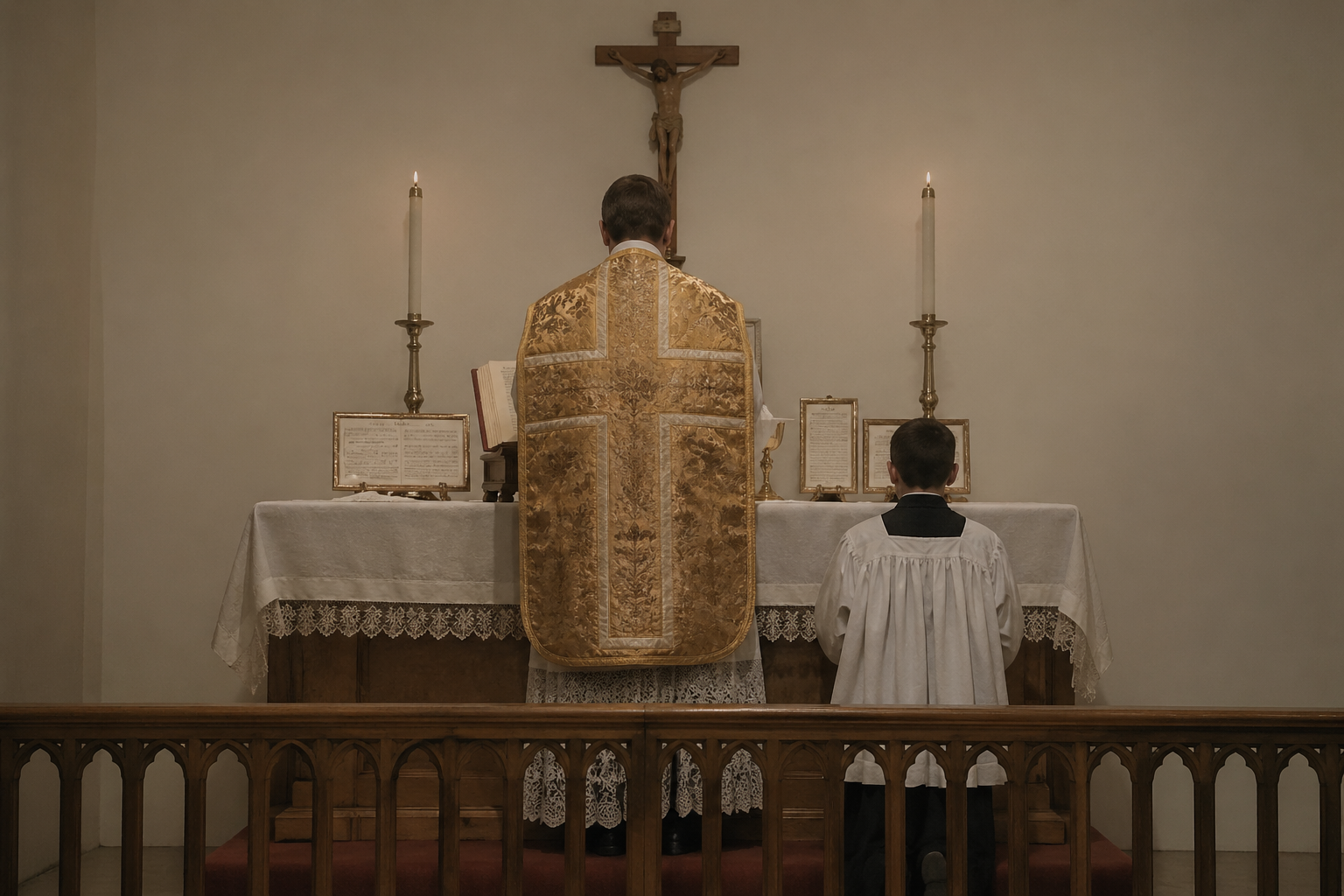
The Vatican has confirmed it is reviewing a formal appeal over liturgical decisions in the Diocese of Charlotte, including restrictions placed on the Traditional Latin Mass The Vatican has confirmed that it is reviewing a formal appeal concerning liturgical decisions taken by Bishop Michael Martin in the Diocese of Charlotte, according to a letter issued by the Dicastery for Divine Worship and the Discipline of the Sacraments. The letter, dated 16 February, states that the dicastery has “received a hierarchical recourse” regarding the bishop’s “apparent refusal” to respond to “requests concerning liturgical matters”. It adds: “The Dicastery will proceed to examine the Acta, which have been assigned protocol number 369/25.” The appeal itself was filed on 9 February. The acknowledgement confirms that the case has formally entered the Vatican’s administrative process, though no indication has been given as to how long the review may take or what outcome may follow. The appeal arises after a series of liturgical measures introduced in Charlotte over the past year. Most notably, Bishop Martin ordered that the Traditional Latin Mass be discontinued at parish churches in the diocese and restricted to a single location outside the city. Changes have also been implemented at parish level. Directives issued within the diocese have included the removal of altar rails and kneelers used for the reception of Holy Communion. These measures prompted concern among clergy, and in January a group of diocesan priests submitted a dubia to the Dicastery for Legislative Texts, questioning the legal basis of the restrictions. Additional controversy followed the circulation of draft liturgical norms, which proposed limits on the use of Latin, the celebration of Mass ad orientem, and certain traditional vestments and practices. The Diocese of Charlotte later stated that the text was a draft and had been revised after feedback. The Vatican body now examining the recourse is headed by Cardinal Arthur Roche, who has overseen the implementation of liturgical policy following Traditionis Custodes. The dicastery’s role includes adjudicating disputes concerning the application of liturgical law and responding to appeals submitted through hierarchical recourse. Such recourse allows clergy or lay faithful to challenge administrative acts they believe have been improperly handled or insufficiently addressed at diocesan level. The procedure involves the submission of documentation, which is then reviewed by the competent dicastery in Rome. No further details about the substance of the appeal have been released beyond the brief description contained in the Vatican letter. The document has, however, circulated widely in recent days. The Diocese of Charlotte has not issued a further statement in response to the Vatican’s acknowledgement of the case.
Apr. 29, 2026
Interview: Archbishop Arrieta on retirement, Pope Leo and Order of Malta reforms
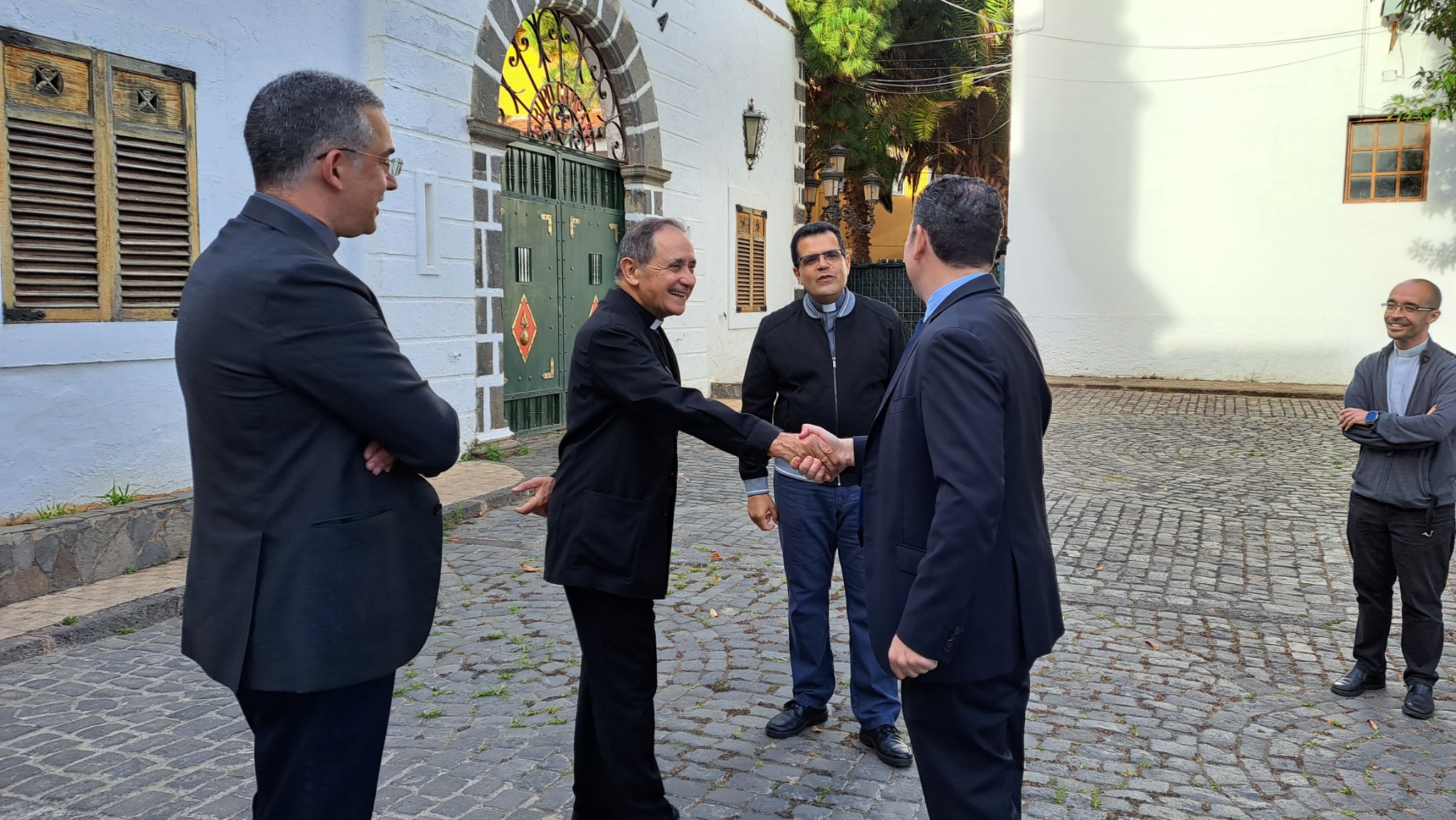
Archbishop Arrieta speaks to AdVaticanum on his retirement, his first impressions of Pope Leo XIV, the Order of Malta, and the ongoing canonical tensions surrounding the SSPX Archbishop Juan Ignacio Arrieta Ochoa de Chinchetru, Secretary of the Dicastery for Legislative Texts, has reached the age of 75, the mandatory retirement age for a bishop, on April 10. To mark the milestone, the Spanish canonist sat down with AdVaticanum to reflect on nearly two decades of service as secretary across three pontificates, his plans for retirement, and the evolving work of the dicastery. He shared his impressions of Pope Leo XIV as he approaches the anniversary of his election, offered a candid assessment of the irregular situation of the Society of St Pius X, and evaluated the 2021 reform of Book VI of the Code of Canon Law, as well as addressing current canonical questions regarding the Sovereign Military Order of Malta, liturgical unity under Traditionis Custodes, and the dubia from priests of the Diocese of Charlotte. Born on April 10, 1951 in Vitoria, Spain, Archbishop Arrieta was ordained a priest of Opus Dei in 1977. A distinguished academic and jurist, he helped establish the faculty of canon law at the Pontifical University of the Holy Cross in Rome, where he has taught for many years. Appointed Secretary of the then Pontifical Council for Legislative Texts by Pope Benedict XVI in 2007, he was ordained a titular bishop in 2008. AdVaticanum: Your Excellency, having just turned 75 and therefore being at the point of submitting your resignation in accordance with canon 401 §1, many in the Church are curious about the next chapter for a canonist of your stature who has served the Dicastery for nearly two decades. After such an intense period of service in the Roman Curia, what would you most like to do in retirement? Archbishop Juan Ignacio Arrieta Ochoa de Chinchetru: We will have to take things one step at a time, always trusting in divine providence. As for me, I have always been involved in the field of canon law, both in the Roman Curia and at the university. I plan to continue living in Rome, also because I am a member of various commissions and working groups within the Roman Curia. Furthermore, if possible, I intend to spend more time in the academic environment, continuing my studies and publications on canon law. I am still teaching courses on canon law and Vatican law, both at the Faculty of Canon Law of the Pontifical University of the Holy Cross and at the Faculty of St Pius X in Venice: two institutions I have seen come into being and to which I feel particularly attached. God willing, in the near future I will be able to carry out these teaching duties with greater peace of mind and collaborate with both faculties. Furthermore, I hope to be able to devote myself a little more to pastoral work, which I have missed for many years. AV: As Secretary since your appointment in 2007, spanning the final years of St John Paul II’s pontificate, the entire Benedict XVI era, the full Francis pontificate, and now the early months under Pope Leo XIV, you have had a uniquely continuous vantage point on the work of what was then the Pontifical Council and is now the Dicastery for Legislative Texts. In your view, what are the most significant shifts you have witnessed in the dicastery’s day to day functioning? +JA: In a way, the major changes the dicastery has undergone in recent years are also reflected in the changes to its name over the years. At the beginning of John Paul II’s pontificate, the dicastery was called the “Pontifical Council for the Interpretation of the Code of Canon Law”; it was later renamed the “Pontifical Council for the Interpretation of Legislative Texts”, because, starting in 1990, it also had to deal with the Eastern Code of Canon Law in addition to that of the Latin Church. Subsequently, it was renamed more generally the “Pontifical Council for Legislative Texts”, since the role of “interpreting” universal laws had become rather secondary, and the dicastery devoted itself more to revising the universal norms of the Church or to offering consultative opinions on normative documents of the Holy See or of the Episcopal Conferences. Now, however, the name is “Dicastery for Legislative Texts”, and while retaining all the other functions it had in the past, most of its time is devoted to assisting bishops and superiors in the application of canon law in light of new circumstances arising throughout the world. This is very interesting work, because canon law is a body of law in force throughout the world and is confronted with the legal systems of every country in the world, as well as with vastly different cultures and sensibilities. AV: Having served under several Popes, what are your first impressions of working with Pope Leo XIV? +JA: In addition to his personal qualities, his profound spirituality, practical mind and missionary heart, the Pope has a particular fondness for institutional and orderly governance. I believe this stems from his experience leading a religious institute with a long standing tradition within the Church and a widespread presence throughout the world. Furthermore, I believe that, with regard to his style of governance and, in particular, his attitude towards justice and the law, we must appreciate the fact that the Pope received a university education as a canonist and, above all, that he did not limit himself to studying canon law, but had to teach it as a professor of canon law in Peru and, for some time, also practised it as an ecclesiastical judge in the courts. He therefore possesses a very concrete and comprehensive experience of the law that not everyone has, ranging from the purely theoretical to the didactic, and to the practical exercise and application of the law in the service of justice. AV: The SSPX continues to occupy a unique and, for many, pastorally sensitive place in the Church, with the announcement of the July 1 episcopal consecrations. With the recent proposal from the Dicastery for the Doctrine of the Faith for a structured theological dialogue aimed at identifying “minimum requirements” for full communion and a possible canonical status, contingent on suspending the announced July 2026 episcopal ordinations without papal mandate, what is your canonical assessment of the current irregular situation of the Society? +JA: For me, this is a very painful matter, especially because during Pope Benedict’s time I had the opportunity to familiarise myself with their situation and to meet with some of their superiors on several occasions. They feel the need for ministers to celebrate certain sacraments, but I believe it was a grave mistake to have presented this matter as an imposition on the Holy See, announcing directly, as if it were a fait accompli, that they intended to carry out episcopal ordinations. This is the attitude of those who, from the outset, consider themselves outside the Church, a stance that contradicts their own awareness that they do not possess ecclesiastical jurisdiction. In fact, when they had to impose disciplinary sanctions for certain conduct by some of their priests, they turned to the Congregation for the Doctrine of the Faith, which granted them the authority to do so. Moreover, Pope Francis had directly granted their priests the authority to hear confessions worldwide and issued instructions so that diocesan bishops could grant them the authority to assist at weddings, thereby ensuring that the marriages would not be invalid for the Catholic Church due to a lack of canonical form. Now all of this risks being compromised, which is a heavy responsibility for those who decide not to obey the Pope’s instructions. AV: Your Excellency, you personally spearheaded much of the work on the 2021 revision of Book VI of the Code (Pascite gregem Dei), which updated sanctions to better address contemporary situations such as clerical abuse, the attempted ordination of women, and offences against the sacraments. With several years of application now behind us, how do you evaluate the effectiveness of these changes in practice? +JA: The dicastery’s reform of Book VI of the Code has been one of the primary tasks since the pontificate of Pope Benedict, who, drawing on his many years of experience as Prefect of the Congregation for the Doctrine of the Faith, was well aware of the practical limitations of the 1983 Code of Canon Law, which, in fact, was rarely enforced. It was the future Pope Benedict who laid the groundwork for effectively combating child abuse beginning with the promulgation of the Curia’s 1988 law, the apostolic constitution Pastor Bonus. He was the one who promoted, in the final years of John Paul II’s pontificate, the new penal regulations against abuse, assuming jurisdiction over the matter within the Congregation for the Doctrine of the Faith, which he himself presided over, because the local episcopate was not managing it effectively. However, the reform of canon penal law required more in depth work, because it was necessary to overcome the prejudices and naivety of the immediate post conciliar period, which had in fact influenced the drafting of the penal norms promulgated in the 1983 Code. Now the principle of criminal legality has been explicitly restored, along with the duty of the ecclesiastical authority to act, without thereby losing the necessary humanity that the penal law of the Catholic Church necessarily entails. VA: The reforms of the Sovereign Military Order of Malta initiated under Pope Francis, particularly the appointment of a special delegate, the drafting of a new constitutional charter, and the emphasis on the Order’s religious character, have raised interesting canonical questions about the relationship between a sovereign subject of international law and the Holy See. Some observers have described it as the Vatican effectively “regulating another country”. Canonically speaking, how do you understand the Holy See’s authority over the Order in light of its dual nature as both a lay religious institute and a sovereign entity? +JA: I have little information on this subject, apart from some theoretical reading and study: I am unfamiliar with the practical realities and concrete needs, so I cannot offer an opinion. I have always believed that, in Church law, concrete situations cannot be resolved with “off the shelf” solutions, but must be tailored to fit, like a suit. Since the Church is a spiritual reality, in which it is the Holy Spirit who moves the initiatives of Christians, “copy and paste” or cookie cutter solutions are of little use; therefore, it is necessary to go through an evaluation by the authority that gives the appropriate legal form in accordance with the flexibility inherent in Church law. With that in mind, it has always seemed to me that, from a legal standpoint, the solution under canon law regarding the institution you mention should have begun with the recognition of its international legal personality and, within the framework of that formal recognition, resolved the religious issues and the remaining matters of various kinds. More specifically, since this is an entity that many countries recognise as sovereign, I believe greater consideration should have been given to the instrument of a concordat: a concordat between the Holy See and the Order, similar to those signed with many countries, would have provided a formal framework consistent with how it is actually perceived in the international arena, and within that framework, the various spiritual and charitable issues raised by this important entity could have been resolved with realism and practicality, etc. AV: A question frequently raised by faithful Catholics attached to the Vetus Ordo concerns how recent liturgical norms, such as those in Traditionis Custodes and its dubia, are to be reconciled with the broader canonical framework for divine worship and the rights of the faithful. From your perspective, how does one provide a clear and authoritative interpretation that safeguards both the unity of the Roman Rite and the legitimate spiritual needs of the faithful who find deeper nourishment in the earlier form? +JA: It seems to me that the Holy Father is fully aware of all these experiences and that he seeks to address them in the best possible way by appealing to everyone’s sense of unity and sensitivity, so that we may coexist with expressions of diversity that do not undermine unity and respect for authority. I believe that promoting unity is one of the central themes we find in the Pope’s words throughout these months of his pontificate. It is not permissible, however, to use the banner of the liturgy to shatter unity or the reverence due to legitimate ecclesiastical authority. Balance is needed. It is important to move forward while respecting the rights of the Christian faithful, and at the same time, we must obey and share in the spirit of unity. AV: Your Excellency, on January 5, 2026, thirty one priests of the Diocese of Charlotte, roughly one quarter of the active clergy and two thirds of them pastors, submitted a formal dubia to this dicastery seeking clarification on whether Bishop Martin’s practices, which explicitly permitted or even favoured by universal liturgical law, such as the use of altar rails, kneelers and prie dieux for the reception of Holy Communion, as announced in the bishop’s pastoral letter of December 17, 2025. The dubia raise fundamental questions about the limits of a diocesan bishop’s liturgical authority in relation to the rights of the faithful and the stability of universal norms. As the dicastery’s Secretary responsible for the authentic interpretation of ecclesiastical law, what is your canonical assessment of the core issues presented in this dubia? +JA: For several years now, our dicastery has been publishing on its website the various opinions and consultations we are asked to provide, omitting, of course, any personal references, whenever we believe they may be of general use to the Church. For us, it is also a way to engage with the legal world and with new situations arising in various parts of the world, seeking to stimulate studies and in depth analysis of specific aspects of canon law. Regarding individual cases, however, as is logical, we are bound to maintain absolute confidentiality, also out of respect for the individuals involved. AV: Thank you very much for your time, Your Excellency, and for your many years of service to the Church.
Apr. 27, 2026