

Fr Jus Toulon
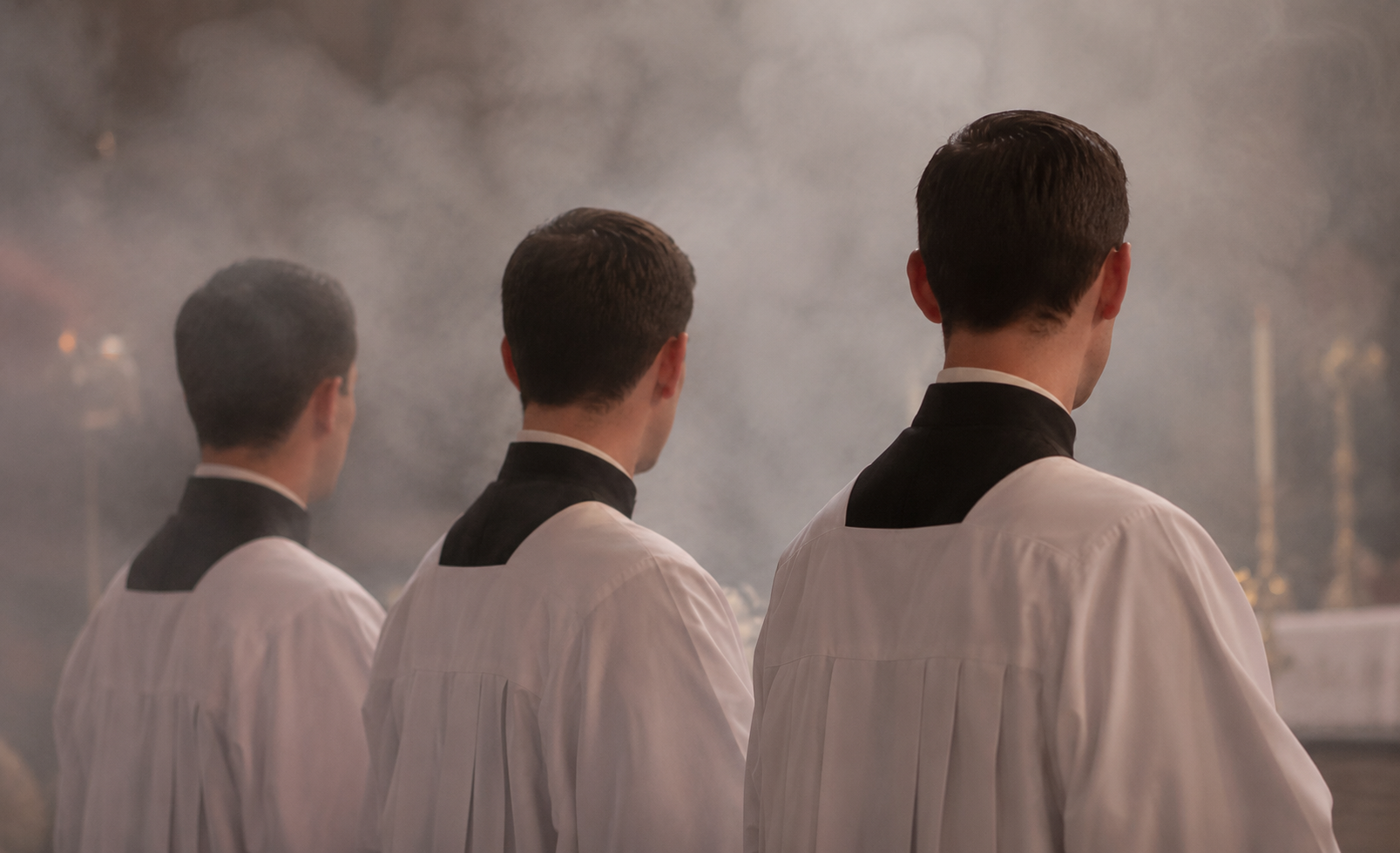
Three priests sent from Fréjus-Toulon to leave Diocese of Amiens
Three priests from the Diocese of Fréjus-Toulon will leave parishes in Amiens after disputes over cassocks, Latin liturgy and preaching led to divisions within local communities. Bishop Gérard Le Stang insisted the decision was not based on doctrinal or liturgical positions, but on the need to restore peace and communion The Diocese of Amiens has confirmed that three priests from the Diocese of Fréjus-Toulon will leave their parishes at the end of the current pastoral year after months of tensions within parish communities in northern France. In a communiqué issued at the end of last month, Bishop Gérard Le Stang of Amiens said Fathers François-Régis Favre, Éloi Legrand and Pierre-Marie Brochery would not remain beyond the one-year experimental agreement between the two dioceses. The priests arrived in September 2025 to serve the parishes of Notre-Dame de Brebières in Albert, Notre-Dame de l’Espérance in Bray-sur-Somme, Notre-Dame des Hauts de l’Ancre in Mailly-Maillet and Notre-Dame des Champs in Acheux. The bishop said the decision followed “a long period of reflection”, during which he consulted priests of the diocese, members of the episcopal council and parishioners holding “diverse opinions”. “I personally received these three priests throughout this year,” Bishop Le Stang said. “I was able to tell each one the objective reasons that lead me to end their ministry among us.” He thanked the priests for “their desire to serve the mission of the Church in our diocese” and praised “their concern for evangelisation, prayer, liturgy and formation”. The three priests became the focus of disputes within the parishes after introducing practices associated with more traditional expressions of Catholic life. Some parishioners objected to the wearing of cassocks, the use of Latin within the Novus Ordo Mass and preaching that emphasised doctrinal and moral teaching. One controversy centred on a refusal to permit a secular concert inside a church because of concerns about preserving the sacred character of the building. Complaints were also reportedly made about sermons addressing sin and moral decline in society. Bishop Le Stang insisted that the decision had not been taken because of the priests’ liturgical or doctrinal positions. “The decision I have made not to extend their welcome is in no way based on a certain number of criticisms directed against them,” he said, listing “wearing the cassock, Roman liturgy, concern for doctrinal and liturgical fidelity, exhortation to coherence in moral life, distinction between the cultic and the cultural”. Instead, he said it had become necessary “to acknowledge the conflict that had become established between them and a certain number of people, which was causing deep and lasting trouble in the communities, and dismay among many”. Bertrand Lejeune, communications officer for the Diocese of Amiens, told French Catholic media that the issue concerned parish relations rather than theology or liturgy. “It was a situation that seemed to have no resolution between some of the parishioners and priests, so the bishop chose not to renew their contracts in order to restore a sense of calm and peace,” he said. He added that reactions to the priests had been divided, with some parishioners welcoming their arrival enthusiastically while others regarded it as burdensome. From 1 September, the four parishes and the sanctuary of Notre-Dame de Brebières will be entrusted to Fr Louis-Pasteur Faye, vicar-general of the Diocese of Amiens and currently parish priest of Saint Simon du Molliennois. His appointment was made with the agreement of the diocesan administrator of Thiès in Senegal. In his communiqué, Bishop Le Stang instructed Fr Faye to work towards “renewed communion and fraternity among all”, encourage “the integration of all sensibilities and generations” and develop missionary initiatives connected to the Sainte Colette missionary field. He was also directed to strengthen youth and vocations ministry, continue Christian formation and ensure “the quality of liturgical and sacramental celebrations”. The bishop acknowledged that the dispute had caused pain throughout the local Church. “This pastoral situation has been painful for everyone – priests, deacon, Religious and laity,” he wrote. “I am also aware of how much it gives the feeling of a failure.” He called on parishioners to respond with “reflection, humility and prayer” and said he intended to visit the affected parishes in the coming months. The episode is likely to attract attention beyond Amiens because of the continuing scrutiny surrounding the Diocese of Fréjus-Toulon, long regarded as one of the most traditionally minded dioceses in France. Under Bishop Dominique Rey, who led the diocese from 2000 until 2025, Fréjus-Toulon became known for welcoming priests and religious communities attached to traditional liturgy, evangelisation and conservative theology at a time when many French dioceses were experiencing declining clergy numbers and falling Mass attendance. The diocese also drew concern from Rome over questions of governance, priestly formation and the rapid influx of different ecclesial communities. In 2022, the Vatican took the rare step of suspending ordinations planned for the diocese while an apostolic visitation was carried out. Bishop François Touvet was later appointed coadjutor bishop before succeeding Bishop Rey. Against that background, the arrival of the three priests in Amiens last year had been viewed by some Catholics as part of a broader effort to integrate clergy formed within more traditional pastoral environments into dioceses facing priest shortages. For now, the three priests are expected to return to Fréjus-Toulon, where Bishop Touvet will assign them to new ministries within the diocese.
May. 7, 2026