The architects of the German Synodal Way have defended controversial guidelines permitting the blessing of couples in irregular unions, amid concerns raised by the Pope that such practices risk undermining ecclesial unity.
The dispute centres on pastoral norms adopted in 2025 by the German Bishops’ Conference and the Central Committee of German Catholics (ZdK), which seek to provide a framework for blessing couples who are unable, or do not wish, to enter into a sacramental marriage.
The initiative has now been taken up in several dioceses, most notably Munich and Freising, where Cardinal Reinhard Marx has instructed clergy to ensure that “no couple should be turned away” if they request a blessing.
In a letter to clergy and pastoral workers, Cardinal Marx wrote: “To all couples who love each other and seek a blessing from the Church for their partnership, I wish that they may feel God’s grace in this blessing.” The archdiocese has confirmed that the guidelines, entitled Segen gibt der Liebe Kraft (“Blessing Gives Love Strength”), will form a “fundamental element” of pastoral practice. Training sessions are scheduled to begin in June to standardise how such blessings are carried out across parishes.
The policy goes further than merely permitting individual priests to exercise discretion. Clergy unwilling to conduct the ceremonies themselves are not free to simply refuse; instead, they are expected to refer couples to another priest or pastoral worker.
Bishop Georg Bätzing, who oversaw the introduction of the guidelines while serving as chairman of the German Bishops’ Conference, has defended their implementation. He said that although “there are differing views on this within the universal Church”, the practice as carried out in his Diocese of Limburg “serves the people” and “does not jeopardise the unity of the Church”. Limburg was among the first dioceses to publish the norms formally in its official gazette, signalling full adoption.
Support has also come from the ZdK, which co-authored the document. Its president, Irme Stetter-Karp, said there was “no reason to withdraw the guidelines” and emphasised their limited scope. The aim, she said, was simply to encourage the provision of blessing ceremonies “for couples who do not wish to enter into a sacramental church marriage or for whom such a marriage is not an option”. She added: “No more and no less. There is no possibility of confusing it with the sacrament of marriage.”
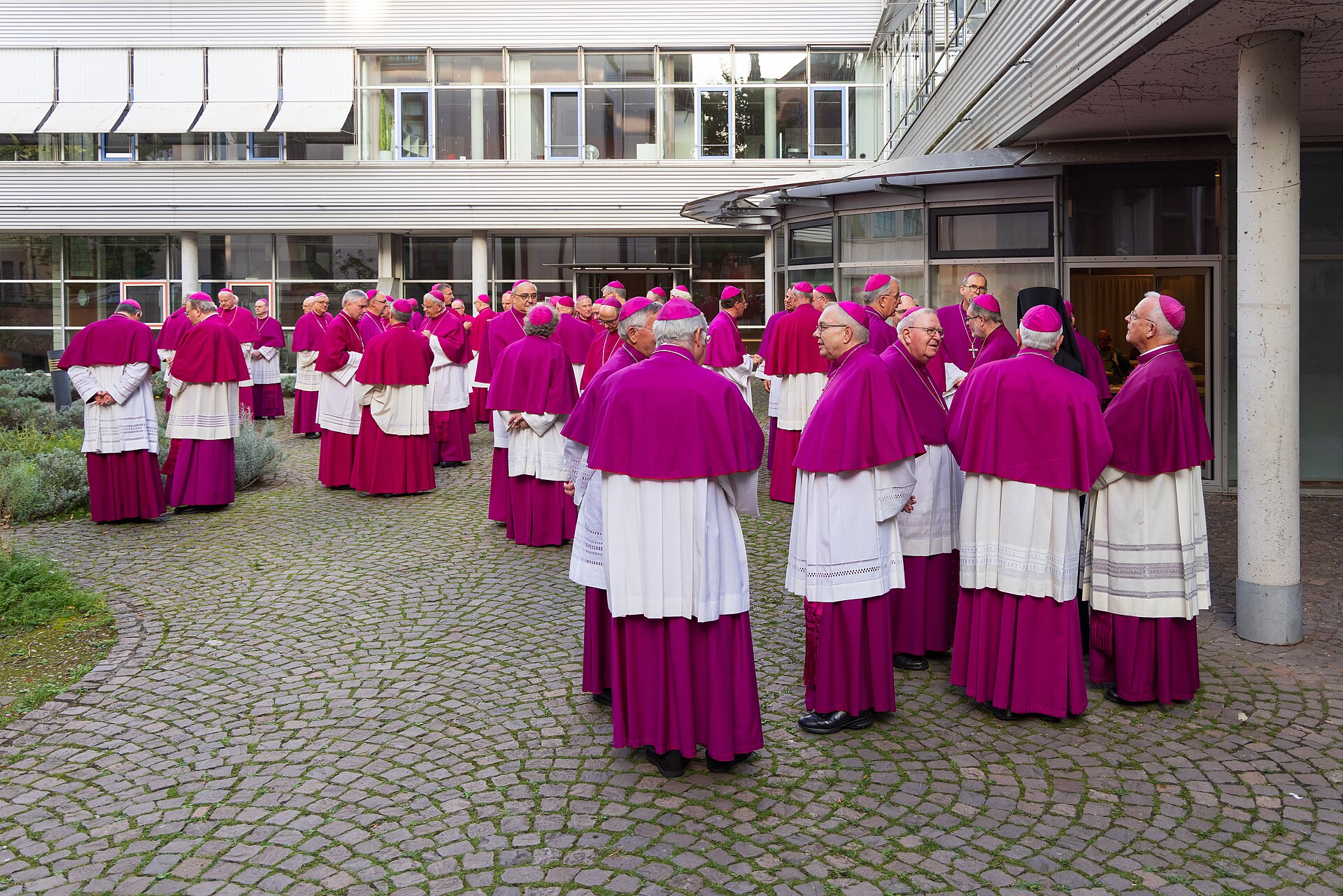
The dioceses of Cologne, Augsburg, Eichstätt, Passau and Regensburg have all declined to implement the document, arguing that it exceeds the provisions set out in Fiducia supplicans, the 2023 Vatican instruction on blessings. The bishops of the opposing diocese are led by notably more conservative bishops in comparison to others in the German bishops conference, with the exception of the diocese of Eichstätt, which is currently vacant after the 2025 resignation of Bishop Gregor Franz Hanke.
Fiducia supplicans allowed for spontaneous, non-liturgical blessings of individuals in irregular situations, but drew a clear line against any form of ritual that might resemble a marriage ceremony or give the impression of endorsing a union contrary to Church teaching.
Pope Leo was asked during a press conference on April 23 about the decision to permit such blessings in Munich. The Pontiff responded: “The Holy See has made it clear that we do not agree with the formalised blessing of couples, in this case, homosexual couples, as you asked, or couples in irregular situations, beyond what was specifically, if you will, allowed for by Pope Francis in saying all people receive blessings.”
The Holy Father continued by distinguishing between general blessings and those directed at particular unions. “When a priest gives a blessing at the end of Mass, when the Pope gives a blessing at the end of a large celebration like the one we had today, they are blessings for all people,” he said, invoking his predecessor’s phrase “Tutti, tutti, tutti” to emphasise that all are welcome and called to conversion.
The Archdiocese of Munich and Freising has described internal communications about the guidelines as “an internal memo”, and has not yet formally promulgated them in its official gazette. Other dioceses, including Osnabrück and Aachen, have taken that step, effectively committing themselves to the policy.