


Pope Leo Xiv
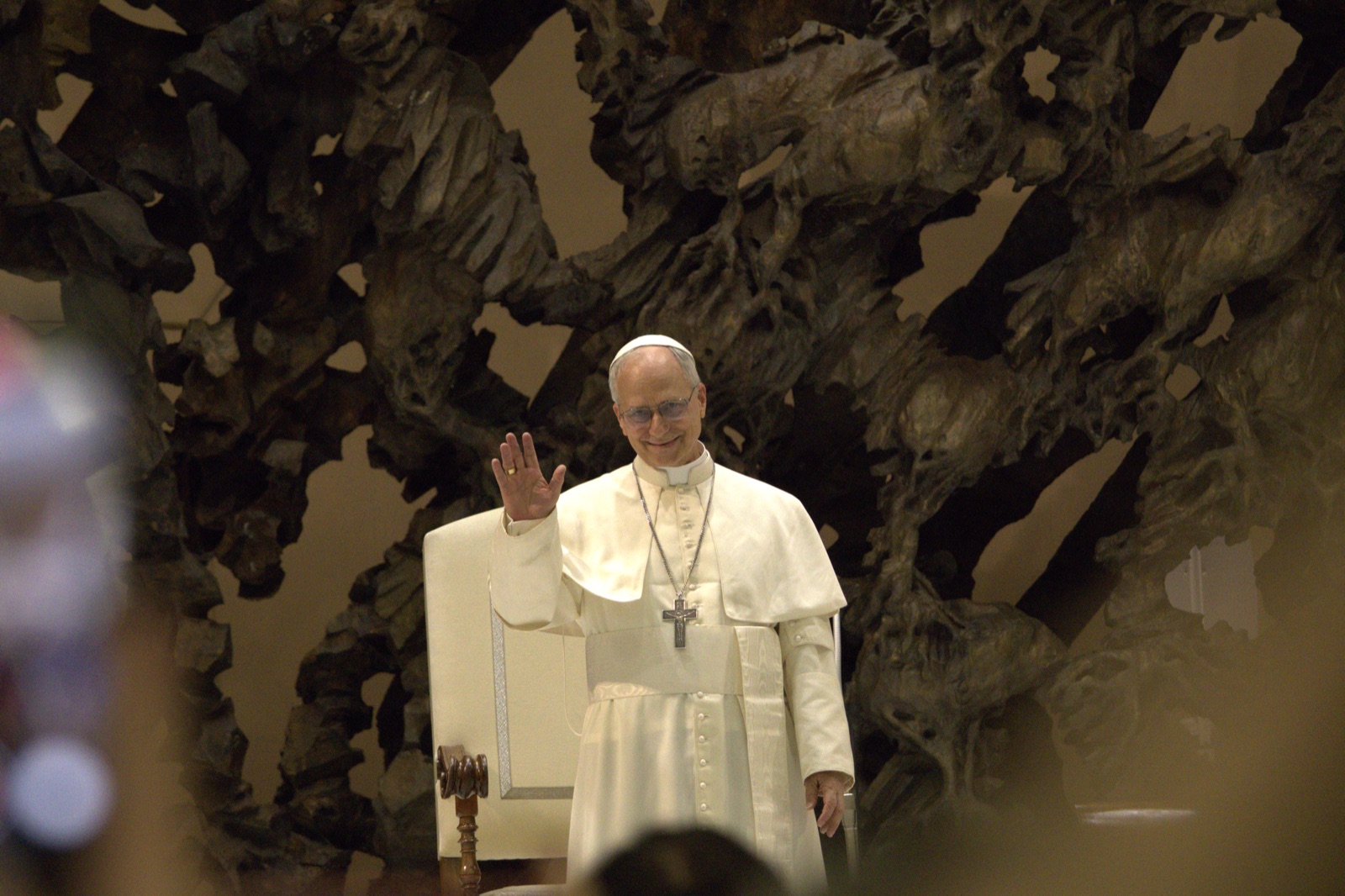
Pope Leo has brought his first African journey to a close with a final Mass in Malabo, ending an 11-day visit across Algeria, Cameroon, Angola and Equatorial Guinea. The final Mass in Malabo, Equatorial Guinea, has brought to a close the first African journey of Pope Leo XIV, ending an 11-day visit that has taken him across four countries. Speaking at the end of the Mass, the Pope told the faithful plainly: “The time has come” to depart, thanking “the Archbishop, the bishops, the clergy and all the people of God journeying in this land”, and marking the conclusion of a visit that has combined large public gatherings with pointed addresses to political authorities. The world is being ravaged by a handful of tyrants, yet it is held together by a multitude of supportive brothers and sisters. The journey, which ran from April 13 to 23, brought the Pontiff to Algeria, Cameroon, Angola and Equatorial Guinea, covering more than 11,000 miles and including 18 flights, alongside a programme of Masses, formal addresses and meetings with civil and religious leaders. It is the first apostolic journey of his pontificate to Africa, a continent now home to almost 300 million Catholics. In Malabo, closing the visit, the Pope spoke of what he described as “an immeasurable treasure of faith, hope and charity”, adding that “this treasure consists of stories, faces and testimonies, both joyful and sorrowful, which will greatly enrich my life and ministry as the Successor of Peter”. He thanked the country’s civil authorities for their welcome and entrusted the people of Equatorial Guinea and the wider continent to the care of the Virgin Mary. During the outbound flight from Rome to Algiers, Pope Leo addressed early comments from US President Donald Trump criticising his stance on geopolitical issues. “I have no fear of neither the Trump administration nor of speaking out loudly about the message of the Gospel,” he said. “That’s what I believe I am called to do and what the Church is called to do. We’re not politicians. We’re not looking to make foreign policy, as he calls it, with the same perspective that he might understand it. But I do believe that the message of the Gospel, ‘Blessed are the peacemakers’, is a message that the world needs to hear today.” The visit began in Algiers on April 13, where the Pope was received with official honours and met President Abdelmadjid Tebboune. Addressing civil authorities and the diplomatic corps, he spoke of the importance of coexistence before visiting the Great Mosque of Algiers. There, His Holiness said: “To seek God is also to recognise the image of God in every creature … it is very important to learn to live together with respect for the dignity of every human person.” Later the same day, the Pope met the small Catholic community at the Basilica of Our Lady of Africa, describing them as a “humble and faithful sign of Christ’s love”. The following day, Leo travelled to Annaba, the ancient Hippo Regius associated with St Augustine of Hippo. Visiting the ruins and celebrating Holy Mass, Pope Leo said: “God’s heart is torn apart by wars, violence, injustice and lies … God’s heart is with the little ones, with the humble, and with them he builds up his Kingdom of love and peace day by day.” From Algeria, the Pope travelled to Cameroon on April 15, where His Holiness met President Paul Biya in Yaoundé and addressed authorities, civil society and diplomats. In one of the most direct passages of the journey, Leo said: “In order for peace and justice to prevail, the chains of corruption must be broken. Hearts must be set free from an idolatrous thirst for profit.” The Pope added that “authentic peace arises when … the law serves as a secure safeguard against the whims of the rich and powerful”. The following day, he travelled to Bamenda, the centre of the country’s Anglophone crisis, where he met Christian and Muslim leaders. He warned against those who “manipulate religion and the very name of God for their own military, economic or political gain”, adding: “Peace is not something we must invent: it is something we must embrace.” The visit continued in Angola from April 18, where the Pope met President João Lourenço in Luanda. Addressing authorities, the Pope criticised what he called the “logic of extractivism” and the “cycle of interests” that has long shaped the exploitation of resources. At the Marian shrine of Muxima, he led the Rosary and told pilgrims: “It is love that must triumph, not war”. The final leg of the journey brought him to Equatorial Guinea on April 21, where His Holiness was received by President Teodoro Obiang Nguema Mbasogo. Addressing authorities, he drew on the City of God to frame a contrast between political choices, asking leaders to consider whether they wished to serve “the city of God” or “the earthly city”. He said that governance must be rooted in “authentic liberty, justice, respect and promotion of the rights of every person”. In Bata, he visited a prison, telling inmates: “You are not alone. Your families love you and are waiting for you … If any of you fear being abandoned by everyone, know that God will never abandon you, and that the Church will stand by your side.” He added: “No one is excluded from God’s love.” The journey concluded on April 23 with the final Mass in Malabo Stadium, attended by large crowds. In his closing words, the Pope returned to the themes that have marked the visit, thanking those he had encountered and pointing to the enduring presence of the Church.
Apr. 24, 2026
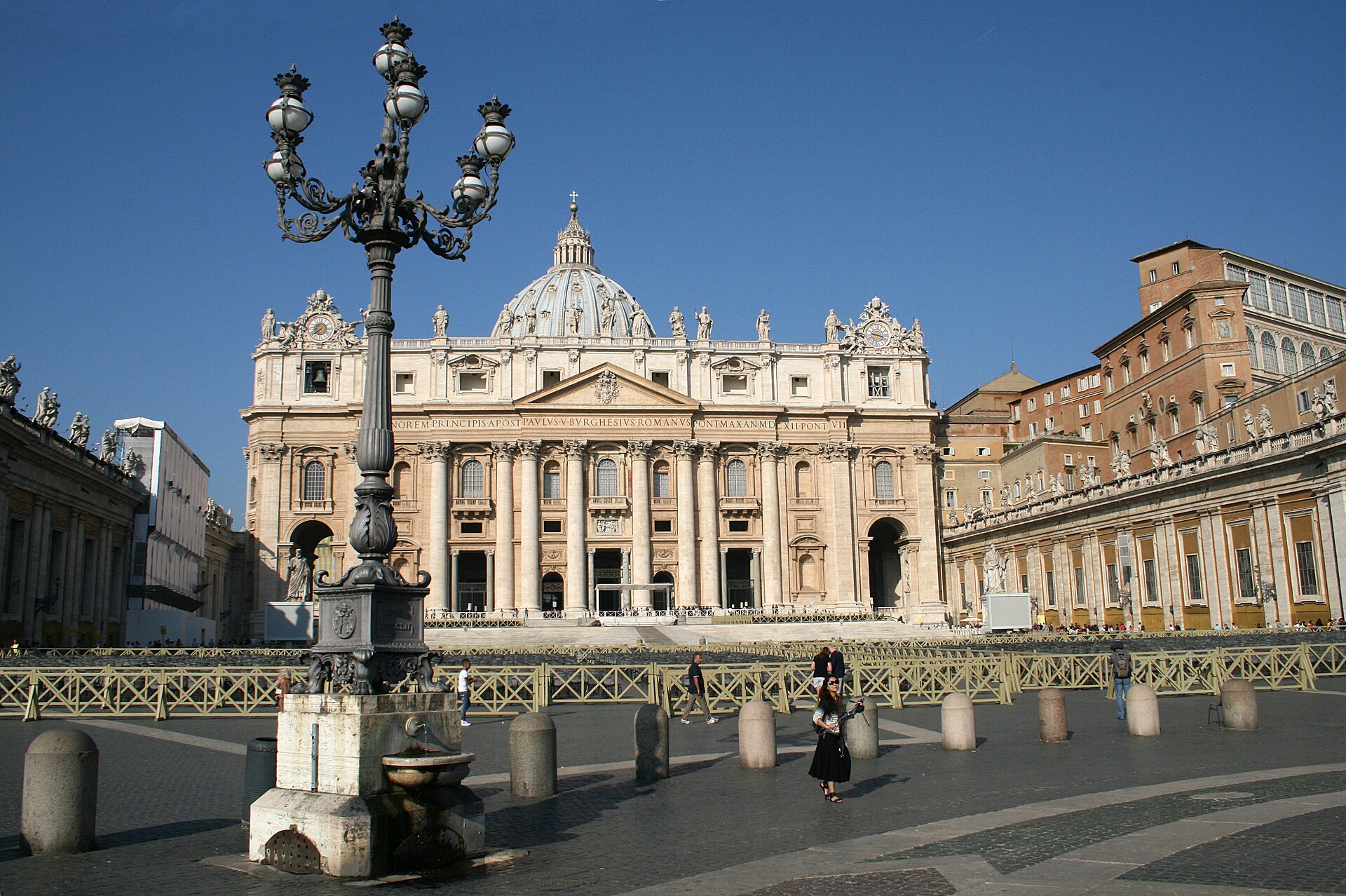
The Vatican has confirmed the next stage of the Synod on Synodality, with a series of international meetings planned through to 2028. The Vatican has outlined the next stage of the Synod on Synodality, confirming that a series of international meetings will take place over the coming two years. In a statement issued on April 17, the General Secretariat of the Synod said it had convened the XVI Ordinary Council in an online session chaired by Cardinal Mario Grech. The meeting opened “with a moment of prayer led by Sr Nathalie Becquart”, before turning to what the Secretariat described as “the current phase of implementation of the Final Document of the XVI Assembly”. The liturgy must not become a source of conflict and division among us. The statement said that the Secretary General “opened the session with several communications concerning the current phase of implementation of the Final Document of the XVI Assembly, the work of the Study Groups, whose final reports are in the process of being published, and the forthcoming organisation of two meetings”. Among the key developments is the convocation of a preparatory gathering at the Vatican from June 23 to 25. According to the Secretariat, this meeting will serve to prepare the continental evaluation assemblies scheduled for the first months of 2028. Those invited include “one representative of the Patriarchs of the Council of the Patriarchs of the Eastern Churches, the Presidents of the International Meetings of Episcopal Conferences, as well as the Presidents of the Episcopal Conferences of the United States and Canada, each accompanied by the Coordinator of the Synodal Team of the respective body”. The statement added: “The Holy Father Leo XIV will take part in a specific working session.” The June meeting forms part of a wider timetable which will see the synodal process continue through to 2028, when continental assemblies will assess the reception and application of the Synod’s conclusions. A global assembly in Rome is expected to follow later that year. The Secretariat also confirmed that a further document to guide this phase is in preparation. During the April 17 session, Fr Giacomo Costa presented “a proposal for a document for the implementation phase of the Synod, particularly concerning the organisation of the evaluation assemblies”. The Council, it said, “discussed the document at length and approved its general structure”. The final version, intended as a complement to the “Pathways for the Implementation Phase” published in June 2025, “will be revised by the Ordinary Council and published by the beginning of summer”. In a separate development, the Vatican provided new details of a meeting of bishops’ conference presidents to be held in Rome from October 7 to 14, focusing on Amoris laetitia. The gathering had previously been announced by Pope Leo XIV in a message marking the tenth anniversary of the document’s publication. According to the Secretariat, the October meeting “will be organised by the Dicastery for the Laity, the Family and Life”, with the General Secretariat of the Synod providing “organisational and methodological support”. It stressed that “this is not a synodal assembly, but a consultative meeting of the Holy Father with the Presidents of the Episcopal Conferences and of the Synods of the Eastern Catholic Churches sui iuris”. In his March 19 message, Pope Leo XIV said the purpose of the gathering would be “to proceed, in mutual listening, to a synodal discernment on the steps to be taken in order to proclaim the Gospel to families today … and taking into account what is currently being done in the local Churches”. The Vatican’s latest moves on the Synod on Synodality indicate that the process has been established as a continuing feature of Church governance and, under Pope Leo XIV, it is acquiring a firmer institutional shape. What is now emerging is a phase of consolidation, with the Holy See proceeding in a measured manner. The personal involvement of Pope Leo XIV is also notable, as the Secretariat has confirmed that he will take part in a specific working session during the June meeting. Popes do not routinely participate in mid-level preparatory gatherings, which suggests a direct interest in shaping the outcome. The explicit inclusion of the presidents of the United States and Canadian episcopal conferences, named alongside their synodal coordinators, is also notable. Other regions are referenced more generally through continental bodies such as CELAM, CCEE and SECAM. This level of specificity suggests continued attention to the reception of synodality in the English-speaking world, particularly in North America. This dual approach, advancing synodality while containing its more contentious applications, indicates that Pope Leo XIV is maintaining the trajectory set by Pope Francis while seeking to give it a more stable institutional form.
Apr. 23, 2026
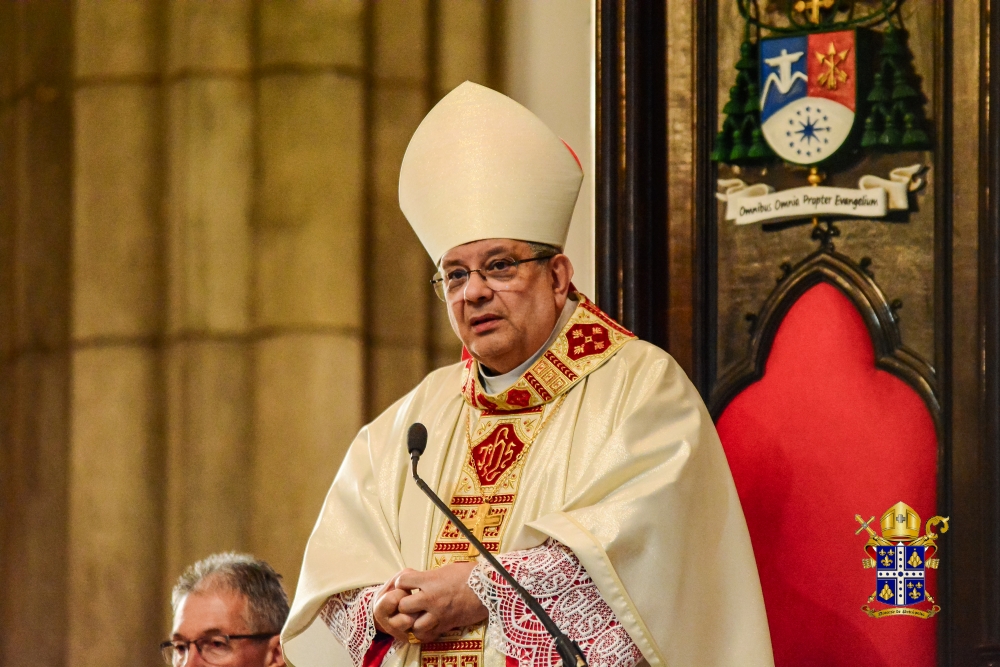
A Brazilian bishop has said young Catholics drawn to traditional practices such as kneeling for Communion and wearing veils have a legitimate place in the Church, describing such expressions as part of Catholicism’s natural diversity rather than a rupture. A Brazilian bishop has said that young Catholics drawn to more traditional forms of worship have a legitimate place in the Church, insisting that such expressions are part of the inherent diversity of Catholic life rather than a rupture within it. Speaking at a press conference during the 62nd General Assembly of the National Conference of Bishops of Brazil in Aparecida, São Paulo, Bishop Joel Portella Amado of Petrópolis addressed questions about the resurgence of interest among younger Catholics in older liturgical customs. The liturgy must not become a source of conflict and division among us. Responding to a question from a journalist with Rede Vida TV about “a return of a certain Catholic traditionalism in Masses”, the bishop acknowledged visible signs of this trend, including “young people who kneel to receive communion, who wear veils”, adding that “it is possible to perceive this in the Masses”. He said that such developments should be understood within the broader context of contemporary religious life in Brazil, particularly among younger generations. Referring to census data from 2022, he noted the large number of 19-39 year olds who do not profess a religious belief. “It’s not that they don’t believe in God,” he said. “The evangelical side calls them ‘unchurched’. I prefer this expression. They believe in God in heaven, but they don’t have a mediation on earth, a path to the Church.” Within this context, Bishop Amado indicated that the attraction to more traditional forms of worship may arise from a wider search for meaning. “In times of emptiness, we start searching, we look for things, even in some historical realities that this youth did not experience,” he said. Bishop Amado, who serves as president of the CNBB’s Commission for the Doctrine of the Faith, emphasised that diversity in liturgical expression is not only permissible but intrinsic to Catholicism itself. “Does it have the right to be this way? Yes, because Catholicism is plural by nature, even more so in a profoundly plural world,” he said. At the same time, he cautioned against any tendency to elevate one form of expression above others or to impose personal preferences on the wider Church. “While there is a right to live and express one’s faith in one’s own way, according to one’s own personality, on the other hand, in the name of love and brotherhood, one cannot impose this on others or believe that only one is right,” he said. The bishop’s comments come amid an ongoing conversation within the global Church about the place of traditional practices in contemporary Catholic life, particularly in the years following the liturgical reforms of the twentieth century and subsequent debates over their implementation. While the early signs of Pope Leo XIV’s approach to the TLM suggest not a dramatic reversal of his predecessor’s policy, they do point to a deliberate attempt to reframe the question in terms of unity, discipline and synodality. What is emerging is a repositioning of the issue within a broader vision aimed at removing ideological conflict and quietly adjusting the tone. Further clarity has come through the remarks of Cardinal Pietro Parolin after he sent a letter to the French bishops on behalf of Pope Leo concerning the TLM. Speaking to Advaticanum’s Vatican correspondent the following day, Cardinal Parolin articulated what appears to be the governing principle behind the Pope’s thinking. “I think we all share this, this, let’s say, assessment that the Pope gives, right?” he said. “In the sense that the liturgy must not become a source of conflict and division among us. It will be necessary to find the formula that can meet legitimate needs. But I believe that this can happen without turning the liturgy into a battlefield.” Sources have told Advaticanum that many cardinals and bishops expect a forthcoming document on the liturgy, following an anticipated encyclical on artificial intelligence. According to these curial sources, the document is likely to address reverence and ritual integrity in the ordinary form of the Roman Rite, as well as the complex issue of inculturation. Such a move would confirm that the Pope’s concern is with the quality and unity of Catholic worship as a whole.
Apr. 23, 2026